
Fish vaccination has become one of the most important health management tools in modern aquaculture. Across salmon, trout, sea bass and other farmed species, producers are under constant pressure to improve fish health, maintain operational efficiency and reduce biological risk throughout the production cycle.
For decades, manual vaccination teams have formed the backbone of the industry. Skilled vaccinators working at high speed have successfully vaccinated billions of fish worldwide. However, as production volumes continue to grow and labour pressures increase, automated vaccination systems are now playing a much larger role in commercial aquaculture.
The discussion today is no longer simply about replacing labour. It is increasingly about consistency, throughput, fish welfare and long-term operational efficiency.
The Traditional Role of Manual Fish Vaccination
Manual vaccination remains widely used throughout global aquaculture and continues to offer several advantages in the right situations.
Experienced vaccination teams are highly adaptable and can work effectively with:
- Varying fish sizes
- Smaller production runs
- Remote locations
- Temporary vaccination campaigns
- Specialist vaccination requirements
In the hands of experienced operators, manual vaccination can achieve excellent results. Skilled teams develop an understanding of fish handling, injection technique and operational flow that only comes through real-world experience.
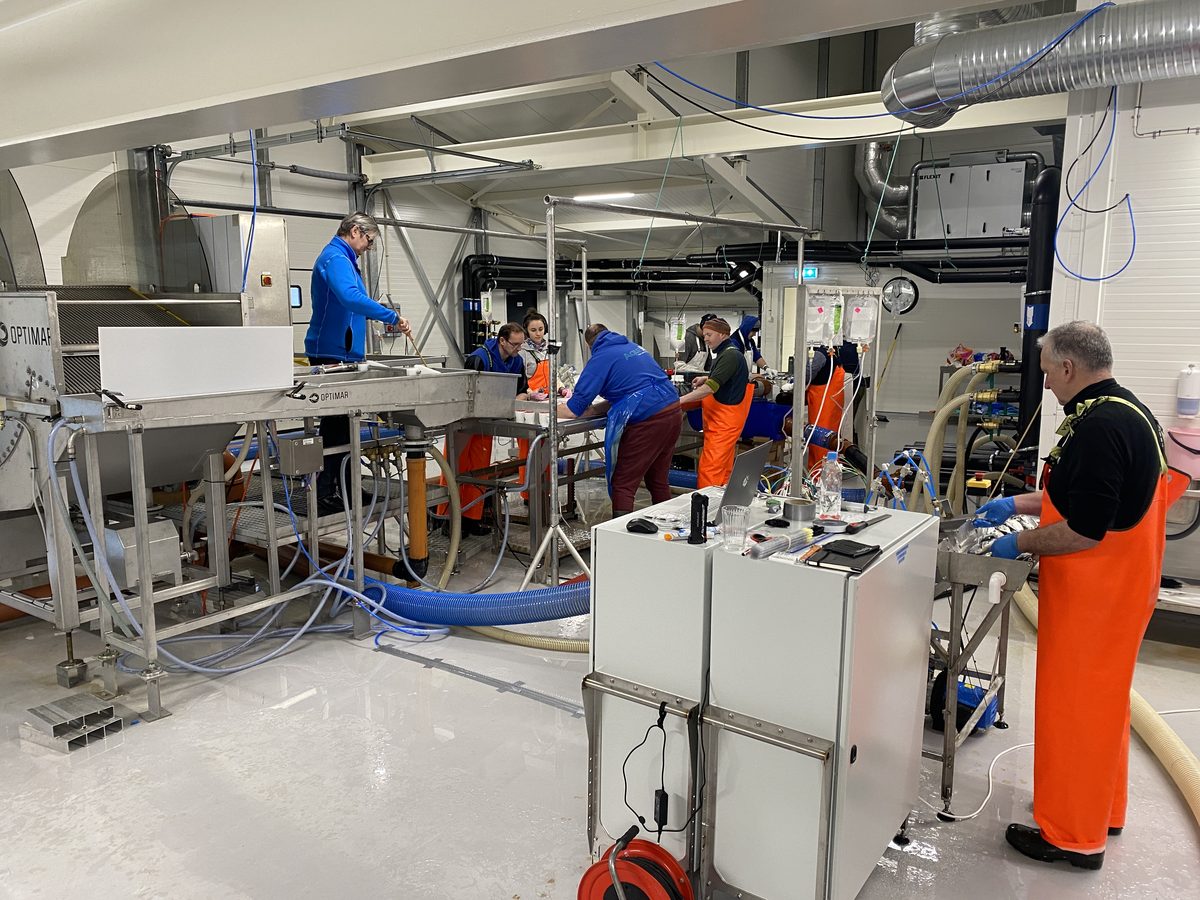
However, modern aquaculture production is changing rapidly. Farms are becoming larger, vaccination programmes more demanding and operational windows increasingly tight.
This is where some of the limitations of manual vaccination begin to emerge.
Labour Availability Is Becoming a Major Challenge
One of the biggest pressures facing the aquaculture industry today is the availability of experienced labour.
Fish vaccination is physically demanding, repetitive and highly skilled work. Maintaining consistency over long shifts requires concentration, experience and stamina. During peak vaccination seasons, securing reliable teams can become increasingly difficult, particularly as global aquaculture production continues to expand.
For many producers, operational planning is now heavily influenced by labour availability rather than simply biological scheduling.
Automation is increasingly being viewed as a way to reduce this pressure while improving production planning and operational certainty.
Consistency Matters Over Millions of Fish
Even the best manual teams naturally introduce variation over time.
Small differences in:
- Injection position
- Injection depth
- Fish handling
- Operator fatigue
- Fish presentation
They can all influence consistency across large vaccination campaigns.
When working with millions of fish, repeatability becomes critically important.
Modern automated vaccination systems are designed specifically to improve consistency by standardising key parts of the vaccination process. Well-designed systems aim to ensure fish are presented consistently to the injector while maintaining controlled injection parameters throughout the operation.
The objective is not simply speed. It is repeatable performance over large production volumes.
Throughput and Operational Efficiency
Throughput is one of the main reasons automation continues to grow across the industry.
Large hatcheries and vaccination operations increasingly require systems capable of processing high daily volumes while maintaining accuracy and fish handling quality.
Automated multichannel vaccination systems can significantly improve operational flow by:
- Reducing bottlenecks
- Shortening vaccination windows
- Improving staffing efficiency
- Increasing production predictability
- Reducing downtime between batches
In seasonal industries such as salmon and trout farming, timing is often critical. Delays in vaccination programmes can impact downstream production planning, transfer schedules and harvesting targets.
Automation helps producers maintain control over these timelines.
Fish Welfare Is Central to Modern Vaccination
Fish welfare is now a central consideration throughout modern aquaculture, and vaccination is no exception.
Regardless of whether vaccination is manual or automated, the quality of fish handling during the process is extremely important.
A well-designed automated system should aim to provide:
- Smooth fish presentation
- Controlled handling
- Accurate injection positioning
- Repeatable injection depth
- Efficient fish flow through the machine
Reducing unnecessary stress and handling variability can contribute to improved post-vaccination recovery and overall operational performance.
As vaccination programmes become increasingly sophisticated, maintaining consistency in fish handling and injection quality is becoming more important than ever.
Automation in Real-World Aquaculture Conditions
One of the key challenges in aquaculture automation is that fish farming environments are rarely perfect.
Vaccination operations may take place:
- In remote hatcheries
- On mobile setups
- In varying temperatures
- Under tight seasonal time pressure
- In offshore or at-sea environments
Systems designed purely around laboratory-style conditions do not always perform well in real-world production environments.
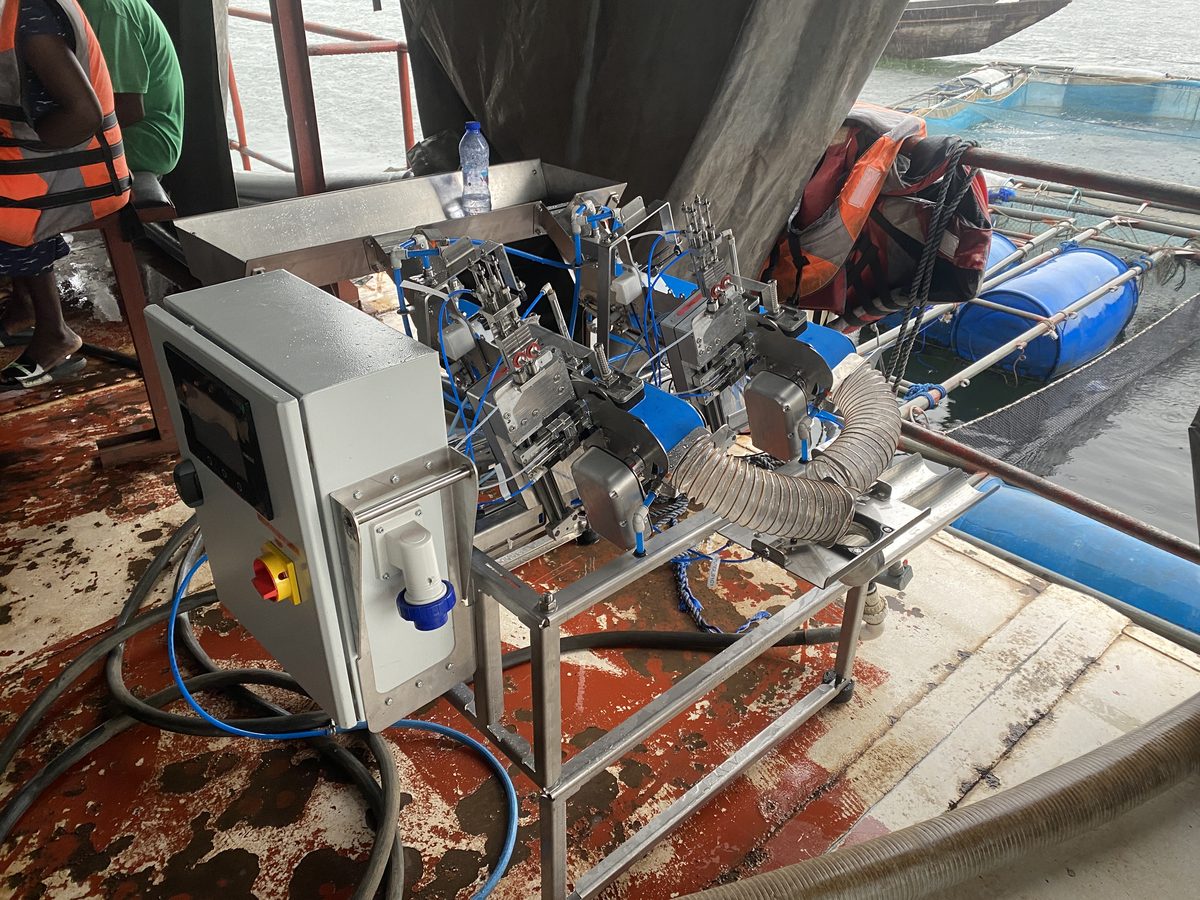
For this reason, many producers are increasingly prioritising robustness, simplicity and reliability when evaluating automated vaccination systems.
Operational uptime and ease of use often become just as important as headline throughput numbers.
Cost Is About More Than Initial Equipment Price
When discussing automated vaccination systems, the conversation often focuses initially on capital cost.
In reality, producers increasingly assess automation as part of a wider operational strategy.
Factors now commonly considered include:
- Labour availability
- Operational continuity
- Throughput requirements
- Consistency
- Servicing support
- Equipment mobility
- Long-term production planning
Automation is not simply a labour replacement tool. It is increasingly viewed as an operational investment designed to support long-term production efficiency and biological performance.
Efficiency and Sustainability in Modern Aquaculture
Sustainability is also becoming an increasingly important consideration in aquaculture production.
As producers face pressure to improve biological performance while maximising the efficiency of existing infrastructure, vaccination consistency and operational efficiency are becoming more closely linked to wider sustainability goals.
Efficient vaccination programmes can help producers:
- Optimise production planning
- Reduce losses associated with disease challenges
- Improve the consistency of fish health management
- Maximise output from existing farming infrastructure
As global demand for farmed seafood continues to grow, technologies that support both operational efficiency and fish health are expected to play an increasingly important role across the industry.
The Future of Fish Vaccination
Aquaculture continues to evolve rapidly, and vaccination strategies are evolving alongside it.
Industry trends increasingly point towards:
- Higher throughput requirements
- More advanced vaccination programmes
- Greater focus on fish welfare
- Improved repeatability
- Increased automation across multiple species
At the same time, experienced vaccination personnel remain essential to successful operations. The future of fish vaccination is unlikely to be manual versus automation. More likely, it will involve skilled operators working alongside increasingly advanced automated systems designed specifically for real-world aquaculture conditions.
As producers continue to scale operations globally, the demand for reliable, flexible and efficient vaccination technology is expected to grow significantly in the years ahead.
About INOCA
INOCA is a multichannel fish vaccination platform developed by experienced vaccinators for real-world aquaculture operations. Designed for flexibility, robustness and high-throughput performance, the system is currently used across multiple species and production environments internationally.
To learn more about INOCA and Sgorran's vaccination solutions, please get in touch via the Contact Us button.